
BROKE’OPOLY
Young adults in New Zealand often find financial education inaccessible, unengaging, and disconnected from their everyday experiences, resulting in low confidence when making financial decisions.
In this project, I explored the financial challenges faced by Gen Z in New Zealand and investigated how gamification can make financial education more engaging, accessible, and memorable.
Specialty
Brand Identity
Product Design
User Experience
2025
Client
Academic
Solo Project
SOLUTION
Reimagine financial education as a fun, social, and hands-on experience that helps young adults build confidence navigating New Zealand’s modern economy.
RESEARCH
A study done on New Zealander’s of various ages to measure financial literacy shows that Individuals with better financial knowledge demonstrate more financially capable behaviors, such as improved saving and borrowing practices.
The motivation provided by financial knowledge is particularly significant at lower income levels, where saving entails greater sacrifices. This suggests that financial education could be especially impact for individuals in these income brackets.
RESEARCH
The nature and the number of financial interactions and responsibilities increase significantly for young people post school. This combined with the learning stump cuased by COVID19 meant Gen Zers leaving school felt unprepared and under educated on the reality of finance.
COMPETITOR RESEARCH
To identify any gaps in the market and aid my design choices I conducted in depth research and analysis into competitors such as Monopoly, Gumption and Game of Life.

Market Gaps
There are currently no games that are specifically designed and tailored to target a defined demographic with focused, relevant content.
IDEATION & DEVELOPMENT
A majority of 18 to 24-year-olds are managing an income and financial commitments.
Research on the younger generation highlighted that social and cultural context such as parents and families have a significant influence on young peoples financial habits. There is also seen to be a level of distrust of financial institutions and some young people choose an institution or an investment based on ethics and values.
To further understand the Gen Z audiences attitude and behavior toward finance, I conducted interviews on Gen Z university students which helped clear any assumptions I had and distinguish how to tackle this issue.
Interview Insights
They are starting to take interest in financial education as their cautious for the future
They dont have any specific long term saving goals but still save for the future
As students they take care in their spending choices and expense management
Students vary in finacial independence with some relying on parents for most expenses
There are varying degrees of discomfort associated with financial management.
There is a desire for approachable, simple, and practical financial tools or resources.
There is varying and unique frustrations and goals relatated to finance
These insights highlighted that young people prefer learning finance through convenient and visually engaging methods and that their lack of financial knowledge is rooted in inexperience rather than a lack of interest. Meaning that an expereience that combines education into an easily accesible and format like a game may influence are larger change in their approach to finance, helping young adults build confidence when discussing and managing their finances.
Competitor Strengths
Combines strategic mechanics and decision-making elements to keep players entertained.
Suitable for a variety of settings, including educational, family gatherings, and casual play.
Strong legacy and trusted reputation, contributing to continued popularity and broad appeal.
Competitor Weaknesses
Core gameplay can feel repetitive, especially for long-time players
Some games lack modern relevance, inclusivity, or depth, alienating younger audiences.
They lack relevance to local finance in New Zealand
Because of generalisation they lack meaningful relevance to a specific demographic
Financial literacy games in the current market often lack engaging, replayable gameplay mechanics that encourage sustained use over time.
Existing titles in this space tend to lack modern relevance, particularly in relation to younger audiences and contemporary financial contexts.
OUTCOME
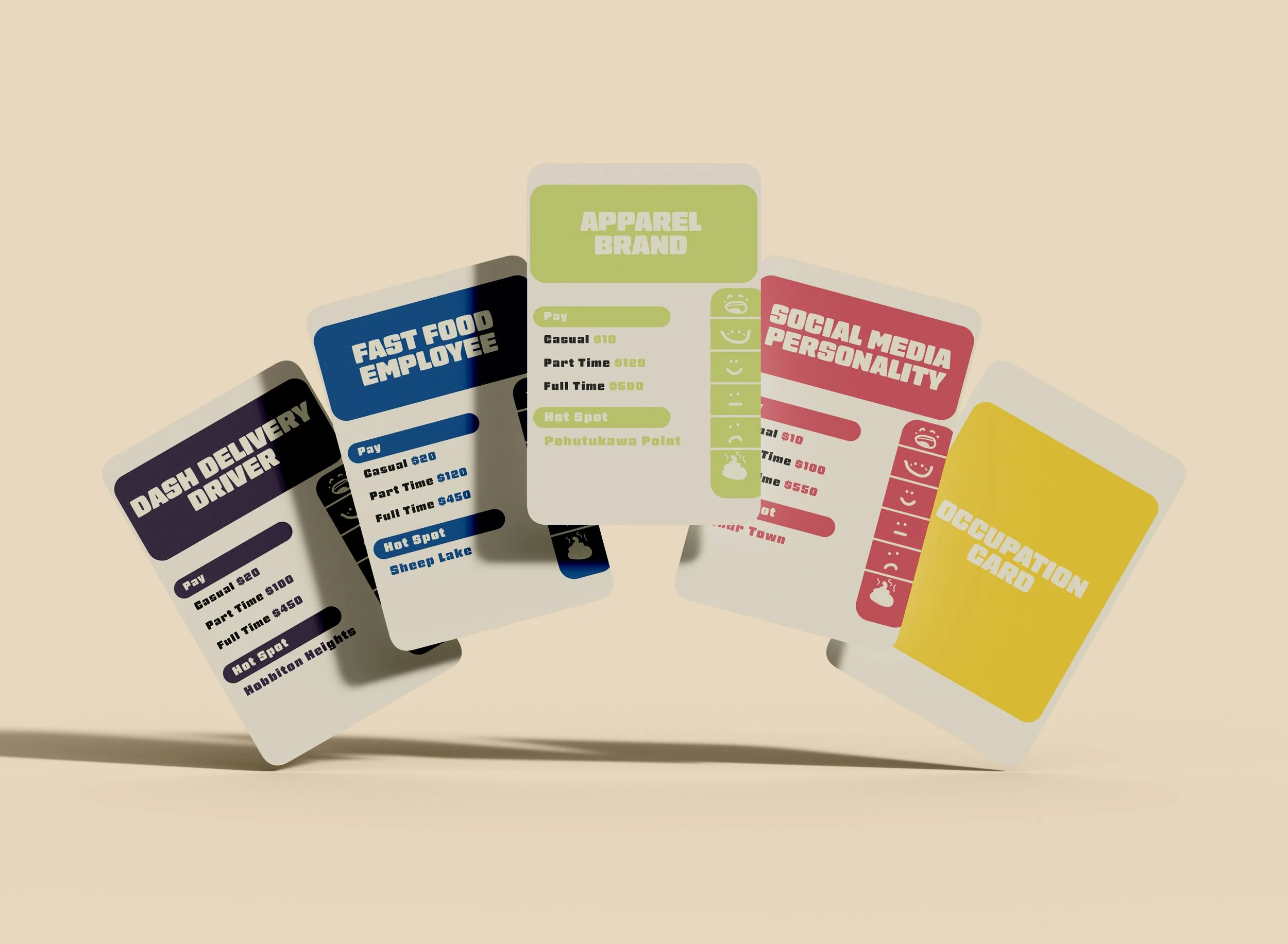
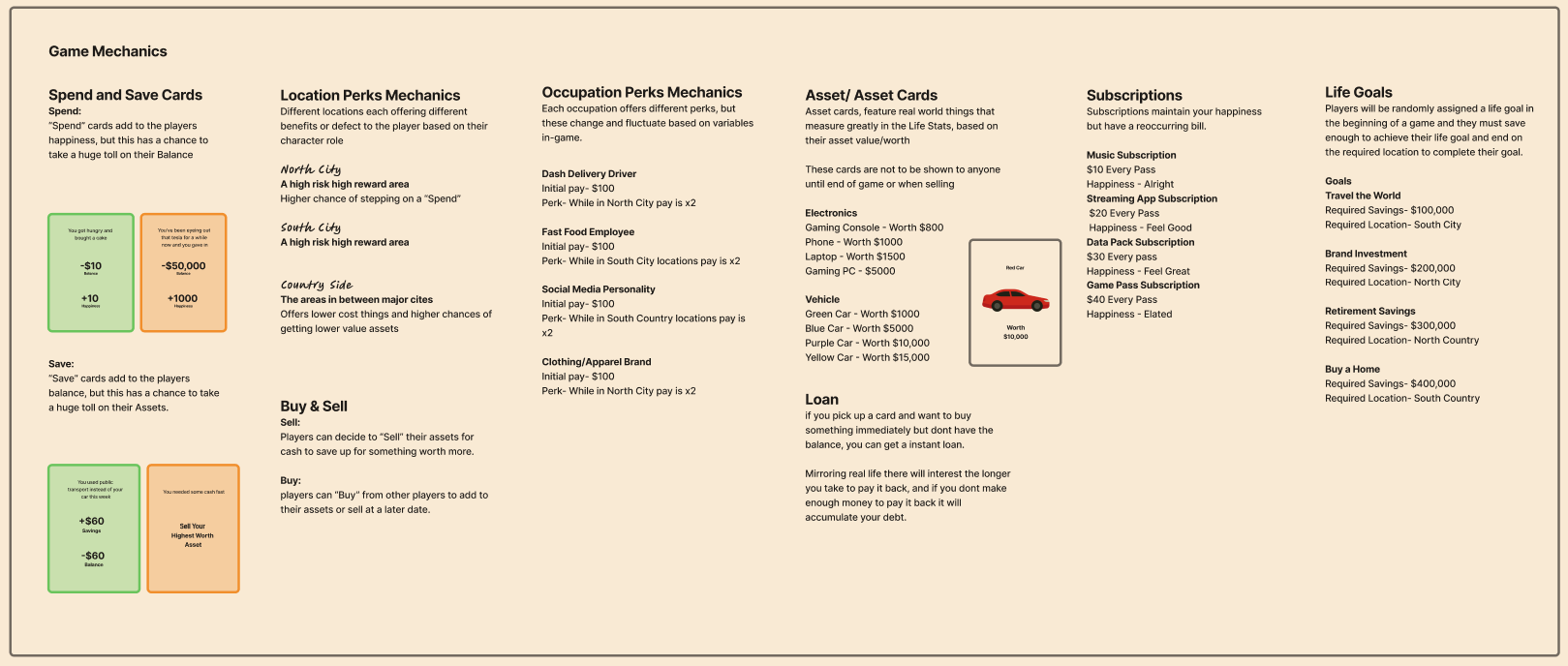
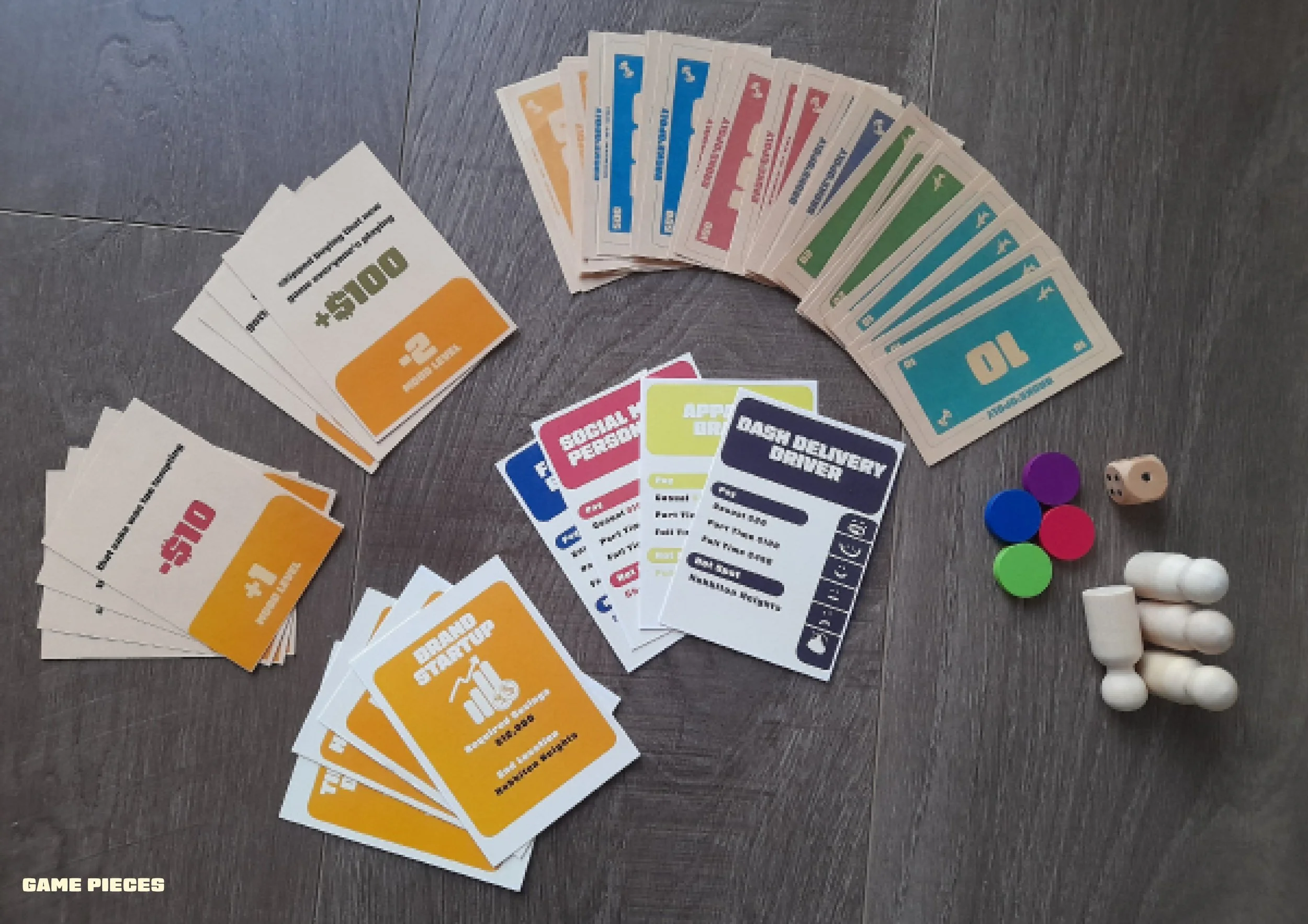
The game simulates real-world financial decision-making through unique occupation based roles. Each role offers distinct gameplay and progression paths, making every session unpredictable, engaging, and strategy based.

“Financial Goal Cards” introduce players to the importance of balancing short and long-term financial objectives. Each card presents different in game goals, encouraging varied strategies and ensuring that each playthrough adapts to the player’s unique decision making style.

More than a board game, Broke’opoly is an exploration of how design can transform education into an experience that is social, memorable, and genuinely enjoyable.

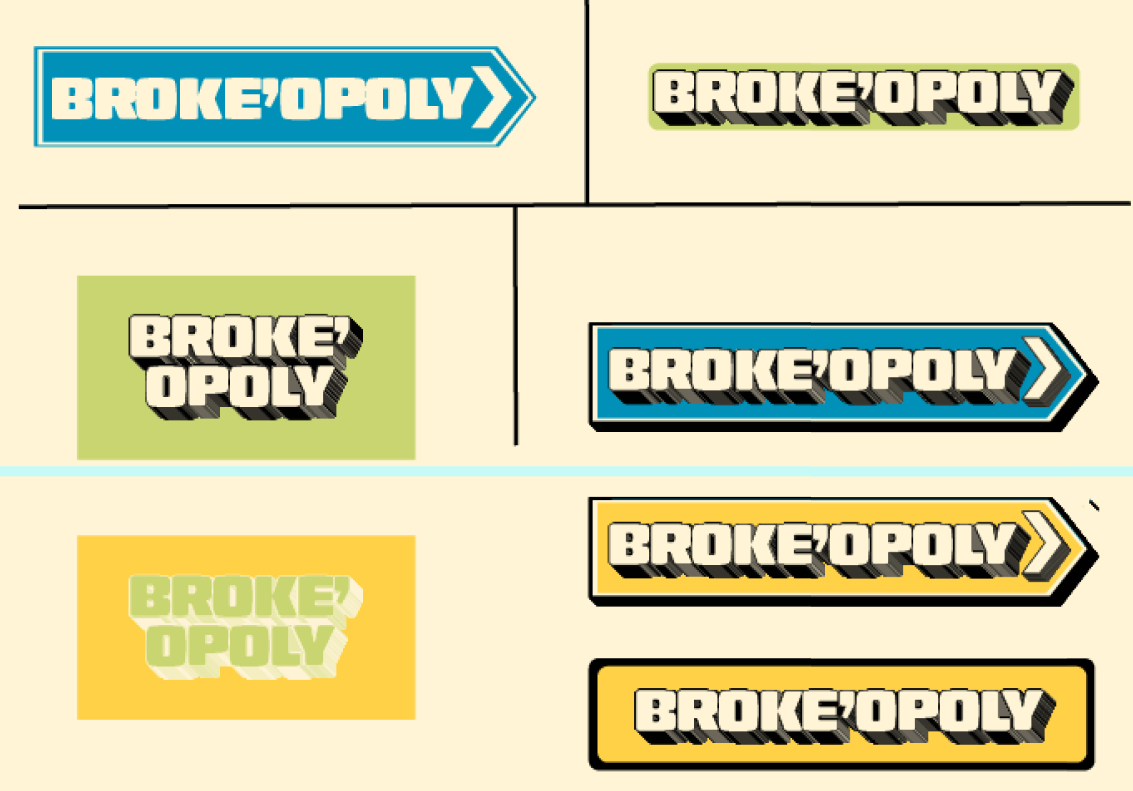
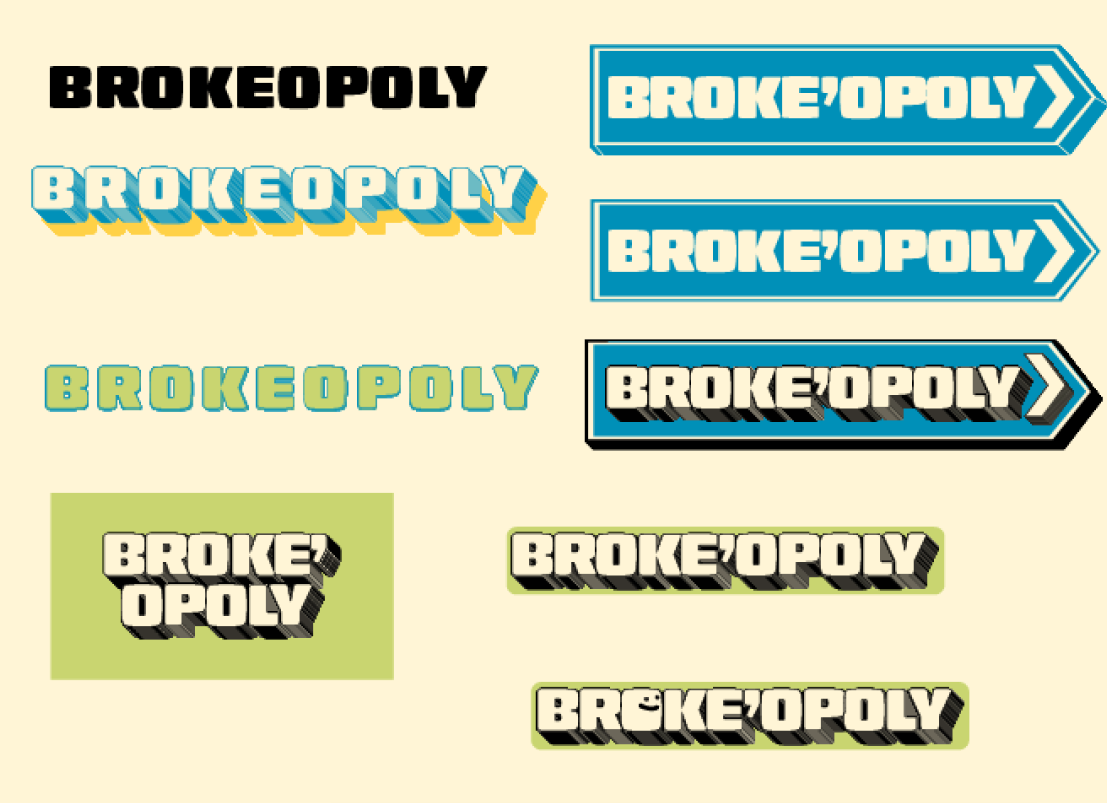
Broke’opoly adopts a relatable, cheeky tone of voice that playfully pokes fun at finance without taking itself too seriously. It creates an approachable, culturally familiar experience for young adults in New Zealand, reinforced through warm colour palettes, bubbly iconography, expressive typography, and playful visuals that together establish a light hearted and welcoming brand experience.

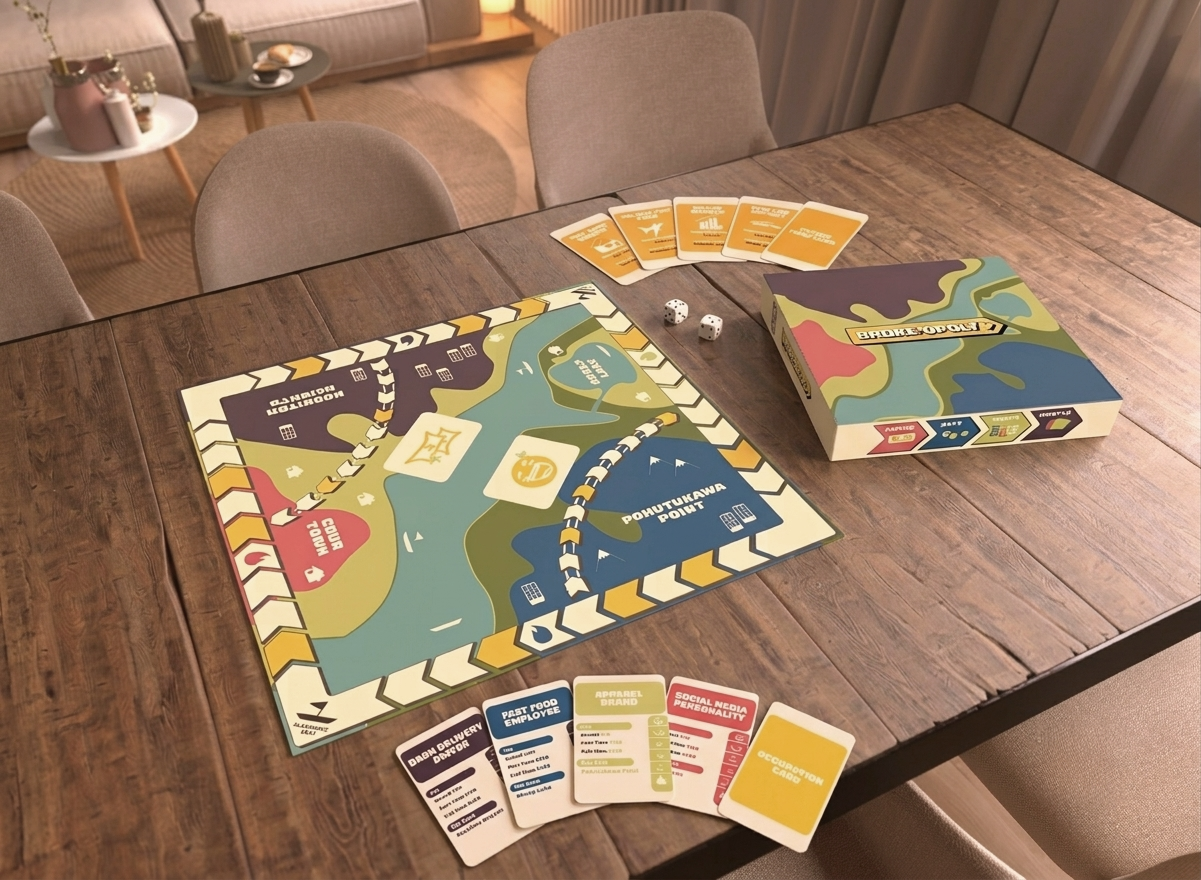
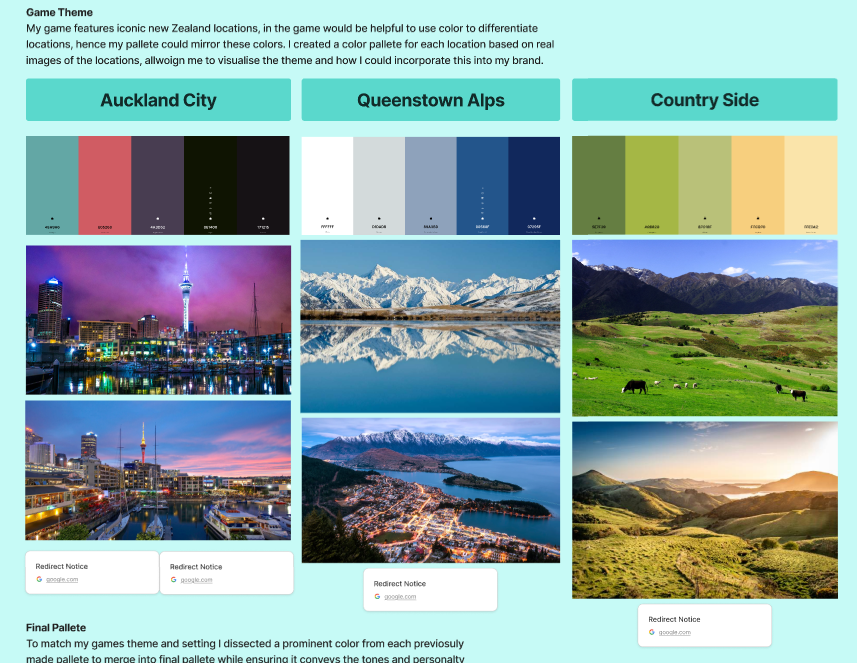
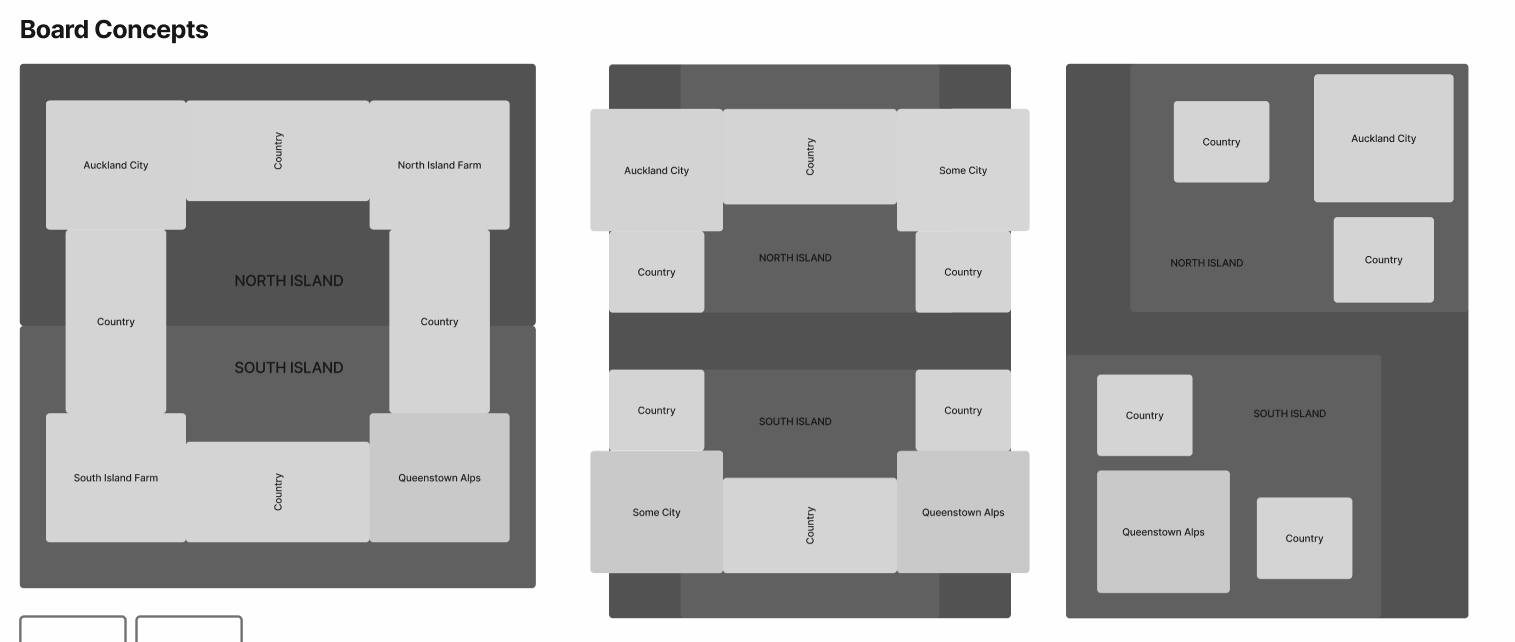
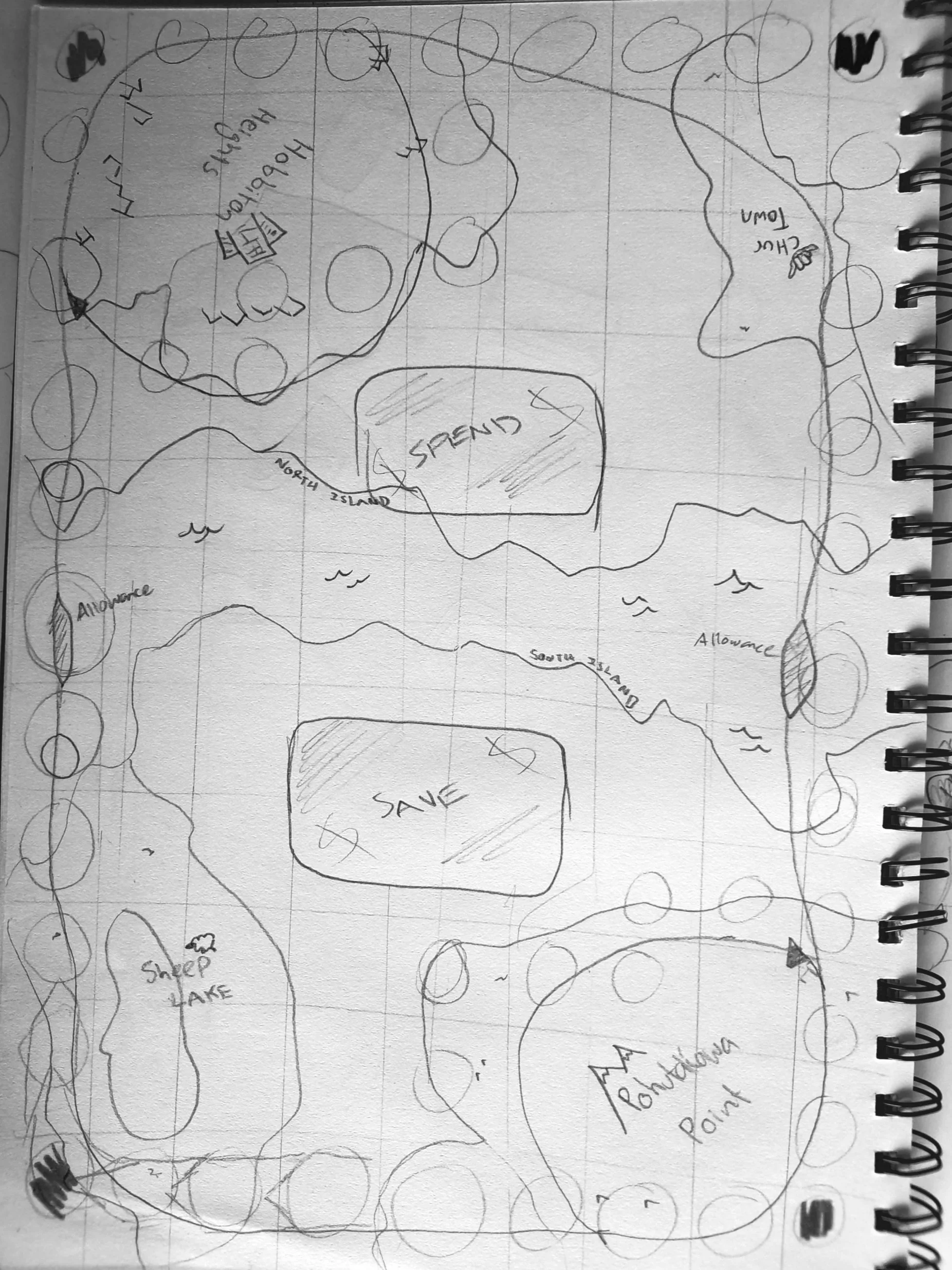
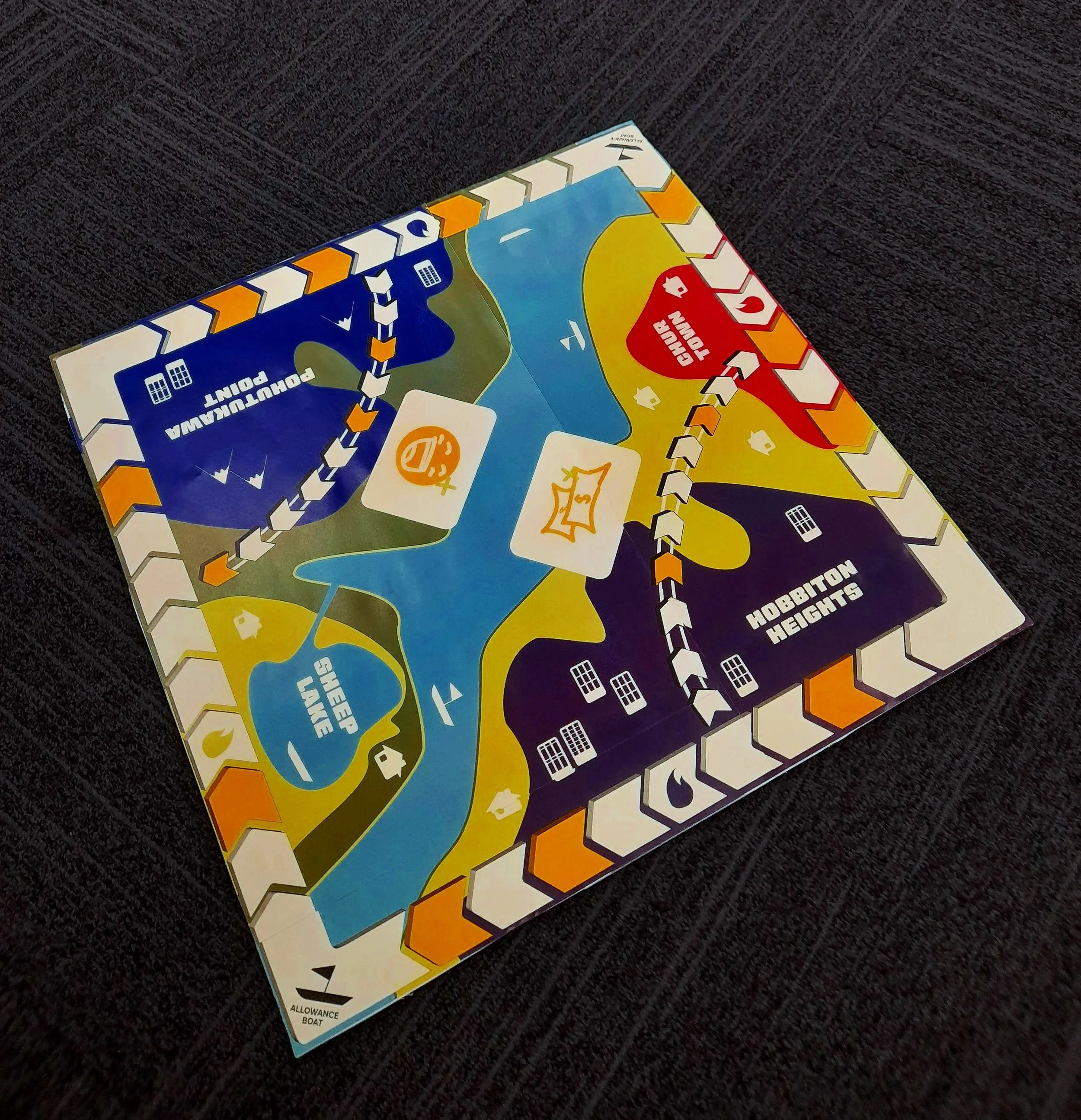
The board features four major locations inspired by distinct New Zealand environments. Each location introduces unique gameplay experiences and challenges that reflect the diverse economy found across Aotearoa.

NEXT PROJECT